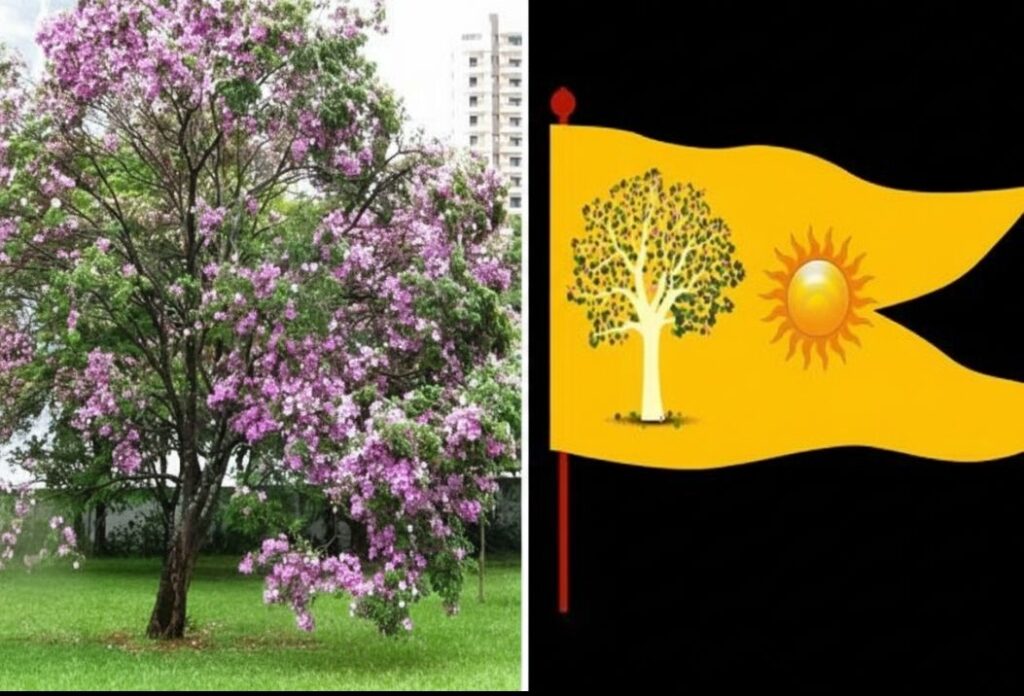
Ayodhya is set to witness another significant cultural milestone as the Ram Mandir prepares to reinstall an ancient traditional flag adorned with the sacred symbols of Om, the Sun, and the Kovidara tree on November 25. The ceremonial reinstatement marks the revival of a heritage practice believed to date back centuries, carrying deep spiritual and historical significance for devotees.
A Revival of Tradition
The dhwaja (temple flag) has long been regarded as a powerful symbol in Sanatana Dharma, representing divine protection, purity, and the presence of the deity. The upcoming reinstatement seeks to restore a tradition believed to have existed during earlier eras of the Ram Janmabhoomi, reconnecting the temple with ancient ritualistic customs that were disrupted over time.
The flag’s unique design featuring the sacred Omkara, a radiant Sun symbol, and the Kovidara tree associated with Lord Ram is rooted in old scriptural references and local legends that describe how these motifs once adorned the temple’s highest point.
A Spiritual Moment for Devotees
The event is expected to draw devotees from across the country, many of whom view the reinstatement as another step in reviving the cultural identity of Ayodhya after the consecration of the temple earlier this year. The ceremonial hoisting of the dhwaja will take place with Vedic rituals, chants, and offerings led by temple priests and scholars versed in ancient traditions.
For many residents of Ayodhya, the return of the traditional flag is not just a symbolic gesture but an emotional reconnection with the region’s long-lost heritage.
Spotlight: The Kovidara Tree and Its Deep Significance
Among the three symbols, the Kovidara tree holds a particularly profound historical and spiritual value in the context of Ayodhya:
The Kovidara (also known as the Indian Orchid Tree) is mentioned in ancient scriptures, Puranic literature, and local legends associated closely with the life and era of Bhagwan Ram.
In traditional lore, the tree is believed to have been abundant in the Ayodhya region and is often referenced as a shelter-giving, auspicious tree representing prosperity, virtue, and divine grace.
For many devotees, the Kovidara symbolizes Rama’s connection with nature, humility, and the simplicity of life in Treta Yuga.
Its presence on the dhwaja is viewed as a reminder of the cultural landscape of ancient Ayodhya, a landscape rooted in natural harmony, spiritual discipline, and righteous living.
Highlighting the Kovidara on the flag signifies a conscious effort to revive not just rituals, but the sacred ecology and civilizational memory of the Ramayana era.
Symbolism of the Sacred Flag
Om: Represents the eternal sound and the essence of all creation.
The Sun: Symbolises energy, purity, enlightenment, and the divine authority of Lord Ram.
The Kovidara Tree: Signifies sacred heritage, natural abundance, and a direct cultural link to Ayodhya’s ancient past.
As Ayodhya continues its transformation into a vibrant spiritual center, the return of the ancient dhwaja stands as a powerful symbol of continuity honouring the past while inspiring future generations with its rich cultural legacy.