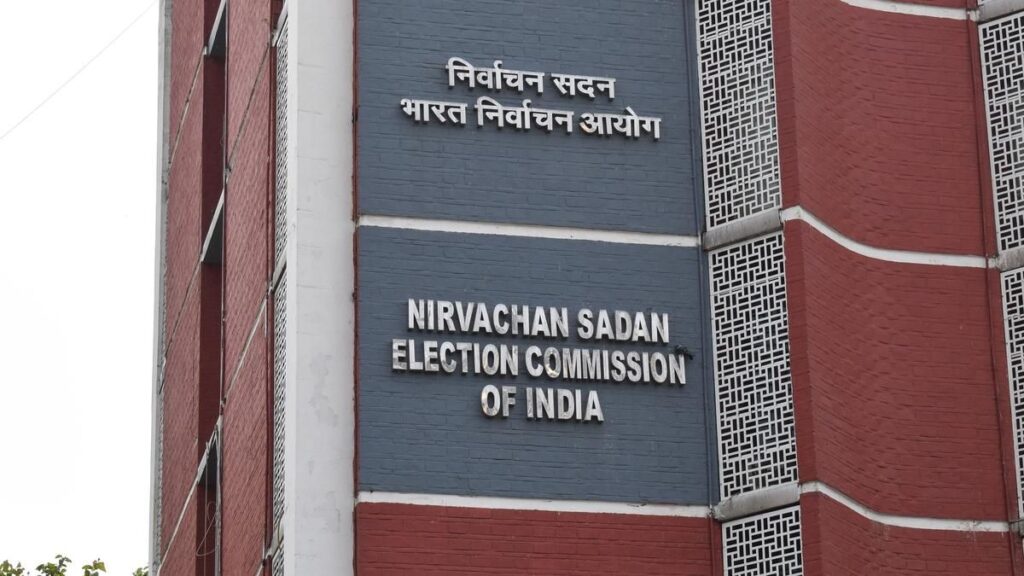
In a major acknowledgement of India’s electoral management capabilities, more than 35 countries including France, Germany, Australia, Belgium and several emerging democracies have expressed interest in adopting India’s voter-list purification model, known as the Special Intensive Revision (S.I.R.) process. These nations have formally invited India’s Election Commission (ECI) to guide them on how to implement large-scale electoral roll clean-up and verification.
The development comes at a time when India is executing one of the largest voter-list purification drives in the world, covering more than 500 million voters across multiple states. The scale, transparency, and administrative precision of this exercise have drawn international attention.
On 3 December, India is set to assume a key leadership role within International IDEA, the Stockholm-based intergovernmental organization that works to strengthen democratic processes globally. Once India takes charge, coordinated efforts will begin to help other nations replicate aspects of India’s model.
ECI officials describe this as a “landmark moment”, crediting Chief Election Commissioner Gyanesh Kumar for steering major reforms that have positioned India as a global reference point for voter-roll management.
What Is the S.I.R. Model and Why Is It Gaining Global Attention?
The Special Intensive Revision (S.I.R.) is an enhanced, door-to-door verification exercise designed to update and purify the electoral roll. It focuses on:
Removing duplicate, deceased, migrated, and ineligible voters
Adding newly eligible voters aged 18–19
Verifying identity and residence through field visits
Using digital tools to track entries and cross-verify data
Ensuring no eligible citizen is left out of the voter list
The ECI launched the expanded S.I.R. process in 2025, beginning with Bihar, and later extended it to 12 states and Union Territories. The final updated rolls will be published by 7 February 2026.
For many nations, especially those dealing with voter fraud, outdated registries, fake entries or low electoral trust, the Indian model offers a tested blueprint implemented on an unmatched scale.
Why 35 Countries Want India’s Guidance
Countries across Europe, Asia, Africa and Oceania have approached India for support through the framework of International IDEA. Officials say these countries are impressed by:
1. India’s Scale and Accuracy
Conducting voter-list purification for half a billion people with field verification at the booth level is unmatched globally.
2. Use of Technology + Human Verification
India blends digital tools with on-ground staff such as Booth Level Officers (BLOs), ensuring accuracy that purely digital systems often miss.
3. Transparency Measures
Every inclusion, deletion, or modification can be verified by political parties and citizens, increasing trust in the process.
4. Prevention of Fraud
Duplicate entries, fake voters and outdated records have historically challenged democracies worldwide. India’s model directly addresses these vulnerabilities.
5. Public Participation
Continuous voter education and citizen facilitation centres make the process more inclusive.
A Major Achievement for the Election Commission
Under the leadership of CEC Gyanesh Kumar, the Election Commission has:
Increased BLO remuneration to improve field verification
Expanded S.I.R. to cover more regions
Strengthened digital monitoring
Engaged with global institutions for knowledge exchange
Senior officials say the new international recognition validates years of reform work:
> “India is now seen as a global standard-setter in electoral roll integrity. This cooperation with 35 nations reflects the trust the world places in our democratic systems.”
Implications for Global Democracy
Experts believe India’s involvement could significantly strengthen electoral integrity abroad. For many countries:
Outdated voter rolls undermine trust
Migratory populations create inconsistencies
Lack of physical verification leads to errors
Electoral disputes arise from inaccurate registries
By adopting India’s S.I.R. principles, nations hope to build cleaner, more credible and more inclusive voter lists.
International IDEA plans to integrate India’s methodology into its democratic-governance framework, allowing participating nations to receive structured training and assessment tools inspired by ECI practices.
Challenges and Critiques
The S.I.R. model, while widely praised, has also raised concerns domestically:
Large-scale deletions could risk excluding legitimate voters
Field verification quality varies by region
Migrant workers and marginalized groups need special attention
ECI maintains that strong grievance-redressal mechanisms and multi-layered verifications ensure minimal wrongful deletions.
As India now prepares to support other nations, experts emphasize that each country must adapt the model to its legal structure, data environment, and social context.
India’s S.I.R. voter-purification model has evolved into a global reference point, attracting interest from democracies seeking to strengthen electoral transparency and trust. With 35 countries inviting India’s guidance, and with India set to take a leading role in International IDEA from 3 December, the ECI’s achievements mark a significant milestone in India’s democratic influence.
As the world looks to modernize its electoral systems, India is emerging as a teacher not just the world’s largest democracy, but increasingly one of its most trusted.