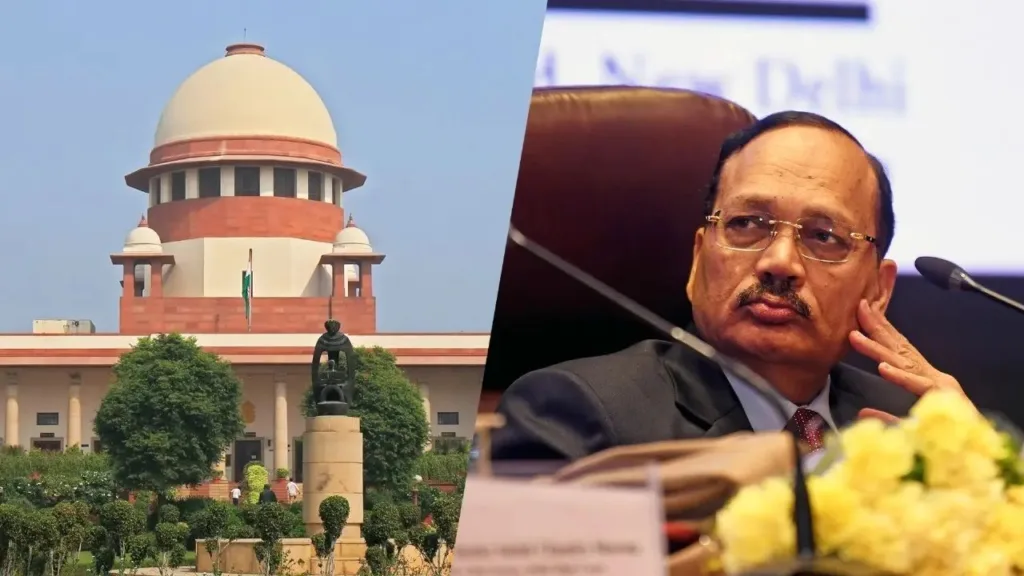
A group of 44 retired judges from the Supreme Court and various high courts has issued a strong public statement condemning what they called a “motivated campaign” aimed at Chief Justice of India (CJI) Surya Kant following his remarks during a hearing on matters concerning Rohingya migrants. The judges said routine judicial questioning had been twisted into false allegations of prejudice, and warned that the effort to personalise disagreement risked harming the independence and authority of the judiciary.
The controversy stems from a hearing on December 2 in which a bench led by CJI Surya Kant asked the petitioner whether the Government of India had officially declared Rohingyas to be “refugees” a point the bench described as a basic legal question about the legal status and entitlements of persons present in India without formal recognition. That line of questioning has been widely reported and became the focal point of public criticism.
Days later, on December 5, a separate group of former judges, senior lawyers and civil society members including signatories associated with the Campaign for Judicial Accountability and Reform (CJAR) — published an open letter expressing deep concern about what they described as “unconscionable” remarks and arguing that the bench’s comments risked weakening constitutional protections for vulnerable people. The signatories urged reflection on the language and reasoning used by the court in cases touching on refugees and human rights.
The 44 retired judges’ statement pushed back forcefully. While acknowledging debate and critique are part of democratic life, the ex-judges said the recent public response went beyond disagreement and amounted to an attempt to delegitimise the judiciary by portraying ordinary judicial questioning as evidence of bias. The statement also endorsed the consideration of a court-monitored special investigation team into alleged illegal procurement of Indian identity and welfare documents by foreign nationals who entered the country in violation of law.
Reactions across the legal community have been sharply divided. Some former judges and human rights lawyers warned that the bench’s lines of inquiry risked erasing the lived reality of persecuted communities and could set a worrying precedent for denying constitutionally guaranteed entitlements; others said robust judicial scrutiny of legal categories such as “refugee” is within the court’s remit and must not be conflated with prejudice. Observers note the exchange highlights tensions between rights-based protections and concerns about illegal migration that frequently surface in public debate.
The episode underscores a broader friction: on one side are voices urging caution about the impact of judicial language on vulnerable groups and constitutional guarantees; on the other are former jurists warning that converting judicial interrogation into personal attacks threatens judicial independence and public confidence in the courts. Legal commentators say the dispute may prompt further institutional responses or clarifications from the Supreme Court bench hearing the matter.