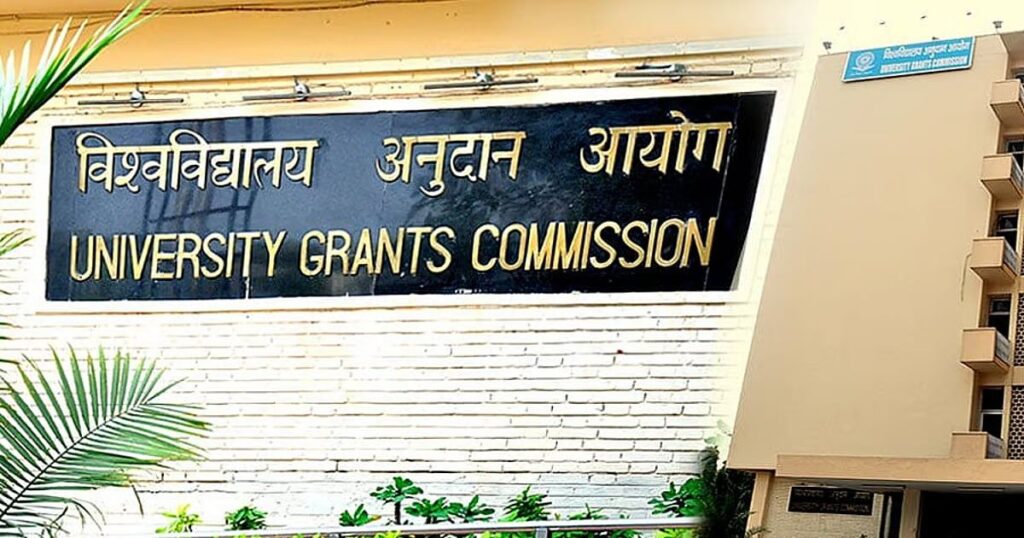
In one of the most significant shifts in the governance of India’s higher education system in decades, the Union Cabinet on Friday approved the Viksit Bharat Shiksha Adhikshan Bill, a landmark piece of legislation that will replace multiple regulatory bodies with a single unified authority. The approval marks the culmination of long-standing policy discussions aimed at simplifying and strengthening oversight of universities and colleges across the country.
A Unified Authority for Higher Education
Under the new framework, the proposed authority which had been widely referred to as the Higher Education Commission of India (HECI) Bill will subsume the roles of the University Grants Commission (UGC), the All India Council for Technical Education (AICTE), and the National Council for Teacher Education (NCTE). This single regulator is intended to streamline regulation, accreditation, and academic standard-setting for higher education institutions, significantly reducing bureaucratic overlap that has long hindered institutional autonomy and innovation.
However, medical and legal education will continue to be regulated by their respective statutory bodies, rather than falling under the new authority’s jurisdiction.
Why the Overhaul?
The move comes nearly five years after the National Education Policy (NEP) 2020 first proposed a unified regulator, responding to concerns that India’s higher education sector had become mired in complex, compliance-heavy systems that stifled institutional growth and academic flexibility. The NEP highlighted the need for a regulatory architecture that is more outcome-focused and less burdened by procedural red tape.
Officials involved in drafting the bill have emphasised that the new structure is designed to reduce duplication of effort, improve transparency, and create clearer lines of accountability within higher education governance.
Separation of Functions and Funding
According to government sources, the unified regulator will be organized into distinct verticals responsible for regulation, accreditation, and setting professional standards. Funding decisions which NEP 2020 envisioned as a key part of the modern regulatory framework are expected to remain with the Ministry of Education, at least initially, to avoid conflicts of interest and ensure financial oversight stays with elected institutions.
This functional separation aims to strike a balance between institutional autonomy and quality assurance, allowing universities more freedom in academic and administrative matters while still ensuring national benchmarks are met.
Debate and Dissent
While the reform has drawn broad attention, it is not without critics. Some members of Parliament and education experts have raised concerns over potential centralisation of power and the impact on institutional autonomy. In recent days, opposition voices urged for more transparency in the bill’s drafting and greater consultations with state governments and academic stakeholders before it proceeds through Parliament.
What Happens Next?
With Cabinet approval secured, the bill is expected to be introduced in the ongoing Winter Session of Parliament. Its passage through both Houses will mark a crucial step in reshaping how higher education is governed in India, potentially affecting millions of students, faculty members, and institutions nationwide.
The government’s supporters argue the reform could usher in a more coherent and internationally competitive regulatory system, while critics warn that effective checks and balances must accompany such a sweeping change to protect academic freedom and preserve the diversity of India’s higher education ecosystem.