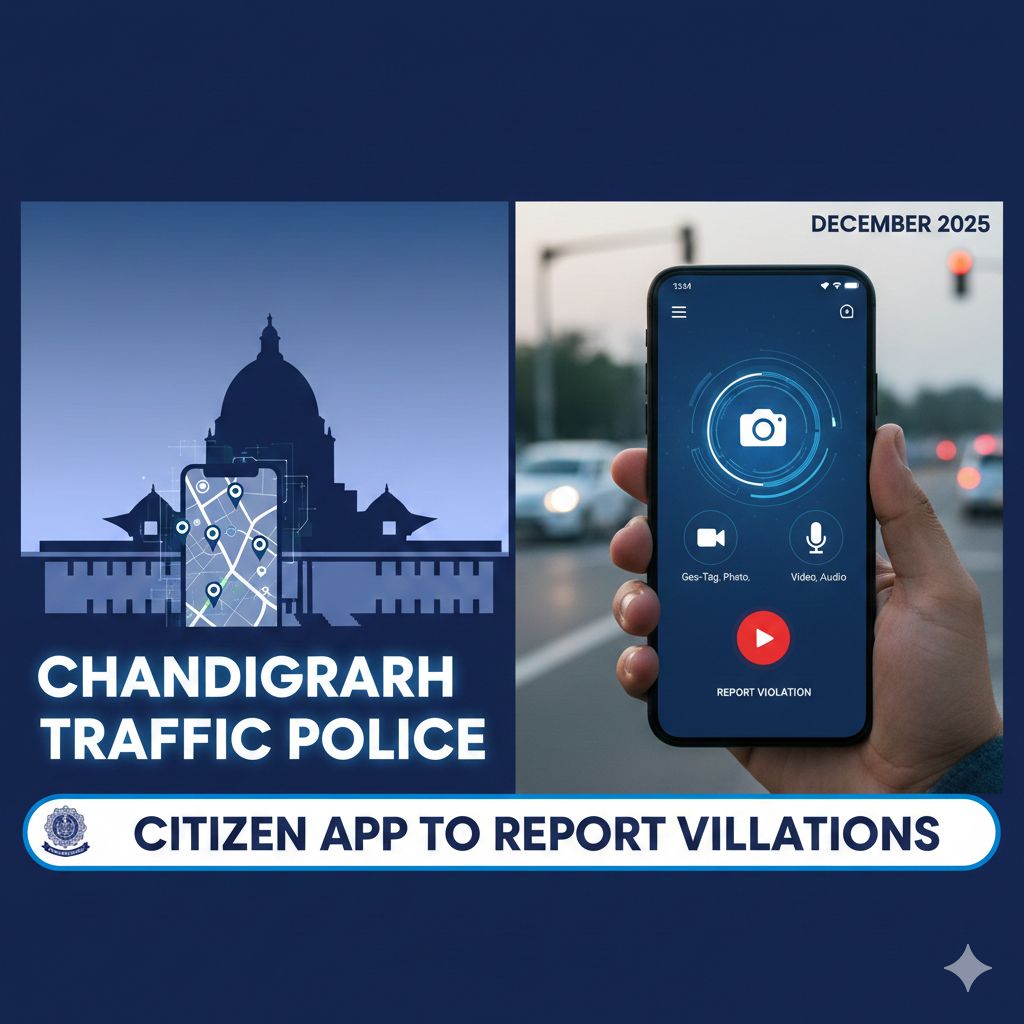
The Chandigarh Traffic Police are preparing to launch a dedicated mobile application that will allow citizens to report traffic violations directly to authorities. The proposed initiative aims to strengthen road safety enforcement and increase public participation in maintaining traffic discipline. Officials believe the app can help address common violations that often go unnoticed due to limited manpower.
The move reflects the growing use of technology in urban policing. While many residents see the plan as a positive step, others have raised concerns about misuse, privacy, and the risk of excessive moral policing.
How the Proposed App Will Function
According to officials, the application will allow users to upload photos, videos, or audio recordings of traffic violations. Each report will include a geotagging feature that captures the exact location of the incident. This will help authorities verify where and when a violation occurred.
User registration will be mandatory for submitting complaints. However, the app will provide an option for anonymity for those who fear confrontation or retaliation. Authorities may still retain user information internally to prevent misuse and ensure accountability.
Once a report is submitted, it will be sent to the traffic police central control room. Officials will review the evidence and verify its authenticity. Only confirmed cases will be forwarded to field units for enforcement action. This verification process is intended to filter out false or frivolous complaints.
Benefits and Concerns
Supporters say the app could improve compliance with traffic rules. The possibility of being reported by citizens may act as a deterrent and encourage safer driving behavior. The app could also help authorities identify violation hotspots and deploy resources more effectively.
However, critics warn that the system could lead to moral policing by the public. There are also concerns about privacy, data protection, and the potential for false reporting driven by personal disputes. Experts stress the need for clear guidelines and strong safeguards.
The success of the initiative will depend on careful implementation, transparency, and responsible use by both citizens and authorities.