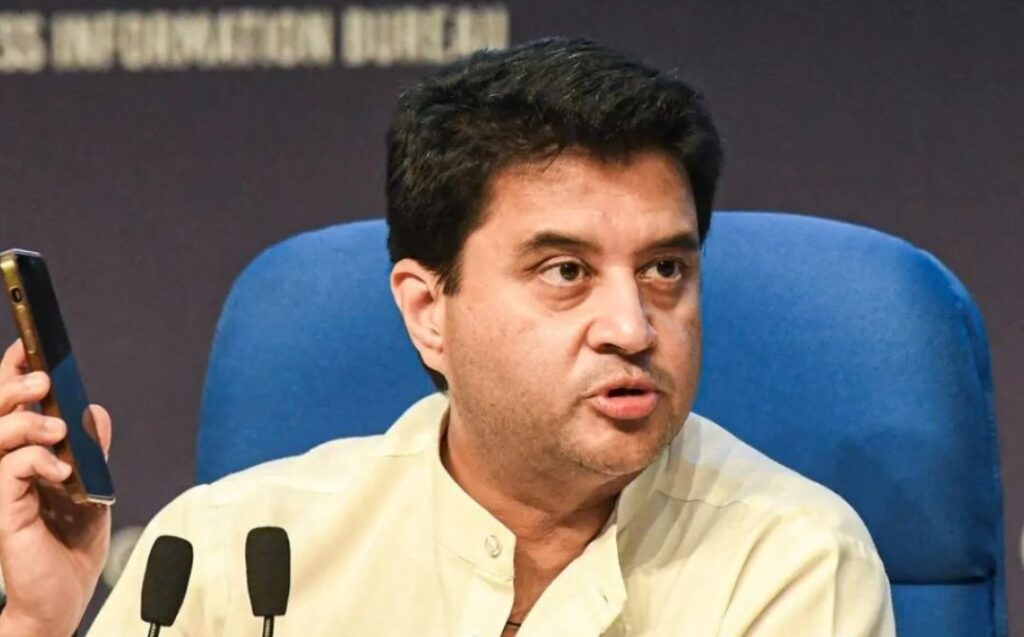
India’s Communications Minister Jyotiraditya Scindia reaffirmed on Wednesday that the government will not dilute its stringent SIM-binding rules for over-the-top (OTT) communication platforms, placing national security above revenue concerns as the telecom sector navigates regulatory headwinds and emerging connectivity technologies.
Addressing reporters, Scindia made it clear that there will be no extension or relaxation to the existing mandate requiring OTT apps like WhatsApp, Telegram, Signal and others to bind accounts to a verified active SIM. He reiterated that the mandatory logout requirement designed to secure web and virtual logins after a fixed period will remain in force as is, with security considerations outweighing any revenue implications for government or industry stakeholders.
SIM-Binding Norms: Firm Deadline, Strict Compliance
The Department of Telecommunications (DoT) earlier issued the SIM-binding directive under the Telecom Cyber Security Rules, 2024, requiring messaging apps to link to a user’s verified SIM or face non-compliance consequences. Scindia’s reaffirmation signals the government’s resolve to enforce these norms, even amid industry concerns that they could impact user experience.
He clarified that the six-hour logout requirement applies only to virtual connections and companion device use, not to primary mobile use, aiming to strike a balance between user convenience and cybersecurity imperatives.
Spectrum Auctions: Timeline Soon
On the telecom spectrum front, Scindia confirmed that the Telecom Regulatory Authority of India (TRAI) has already submitted its recommendations for the next round of spectrum auctions. The DoT is reviewing these proposals which include pricing and band-allocation suggestions with an official auction timetable expected to be released later.
Industry sources note that TRAI has recommended auctioning broad swaths of available airwaves, including 4G and 5G frequencies, while calling for lower reserve prices and reduced entry barriers to boost participation from financially strained operators.
Satellite Broadband Services on the Horizon
Scindia also spoke about satellite communication services, saying the government is “as eager as you are” to introduce commercial satellite broadband in India contingent on finalising spectrum pricing and full compliance with security protocols. Once these conditions are met, spectrum will be allocated to qualified operators.
Several global and domestic players, including SpaceX’s Starlink, Bharti Airtel’s OneWeb alliance and Jio’s satellite ventures, are awaiting regulatory clarity and pricing finalisation before rolling out services in India’s vast and underserved regions.
AGR Relief: Legal Path Only
On the contentious issue of Adjusted Gross Revenue (AGR) dues, Scindia ruled out any fresh government relief beyond what has been allowed under the Supreme Court’s framework, particularly in the case of Vodafone Idea. He emphasised that other telecom firms seeking similar relief must pursue legal avenues, rather than expect ad-hoc policy concessions.
This stance comes amid ongoing appeals from industry players such as Bharti Airtel for clarity and parity on AGR-related liabilities, with the government sticking to the judicially sanctioned approach.