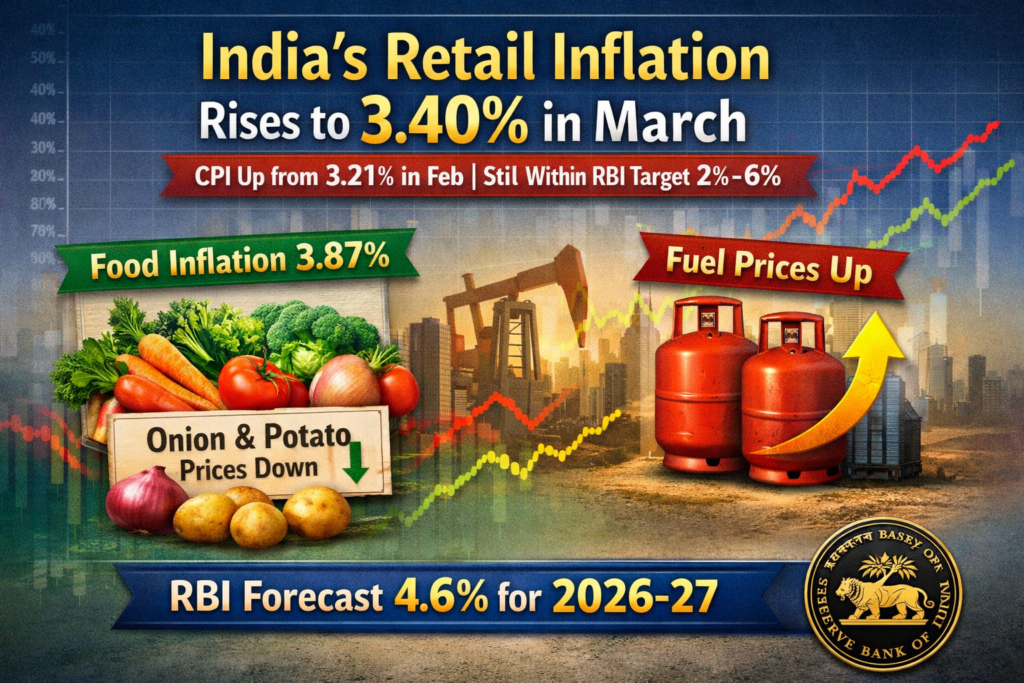
India’s retail inflation, measured by the Consumer Price Index (CPI), rose marginally to 3.40% in March 2026, up from 3.21% in February, according to the latest government data. Despite the uptick, inflation continues to remain well within the Reserve Bank of India (RBI)’s target range of 2%–6%, offering policymakers some breathing room amid global uncertainties.
Moderate Rise, Still Below Target
The March inflation print came in slightly below market expectations and remains under the RBI’s medium-term target of 4%, indicating that overall price pressures are still contained.
This marks the second consecutive monthly increase, reflecting early signs of pressure from food and fuel segments.
Food Inflation Drives Uptick
Food inflation stood at 3.87%, primarily driven by rising prices of vegetables, edible oils, and processed food items.
However, there was some relief as prices of key staples such as onions and potatoes saw declines, helping to partially offset the upward pressure.
Fuel Prices and Global Factors Add Pressure
Fuel-related costs also contributed to inflationary trends, particularly following recent LPG price hikes. Additionally, ongoing geopolitical tensions especially in West Asia have increased global energy prices, posing upside risks to inflation.
India, which imports a large share of its crude oil requirements, remains vulnerable to such global shocks. Analysts warn that sustained increases in energy prices could gradually pass through to consumers in the coming months.
Core Inflation Remains Stable
Core inflation (excluding food and fuel) has remained relatively stable at around 3.7%, suggesting that underlying demand-side pressures in the economy are still moderate.
RBI Outlook and Policy Implications
The RBI has projected average inflation at around 4.6% for FY 2026–27, indicating a cautious outlook amid external risks such as geopolitical tensions and uncertain monsoon conditions.
Economists believe the central bank is likely to maintain its current policy stance for now, balancing inflation control with economic growth. The relatively benign inflation print gives the RBI sufficient room to avoid aggressive rate hikes in the near term.
Outlook: Risks Remain
While inflation remains under control for now, several risks persist:
Prolonged global conflicts impacting energy and commodity prices.
Possible below-average monsoon affecting food supply.
Rising input costs for businesses.
If these factors intensify, inflation could inch closer to the upper end of the RBI’s comfort band in the coming months.
India’s inflation trajectory remains stable but watchful. The March data reflects a delicate balance moderate price pressures are emerging, yet overall inflation continues to stay within manageable limits. The coming months will be crucial in determining whether global and domestic risks translate into sustained inflationary trends.