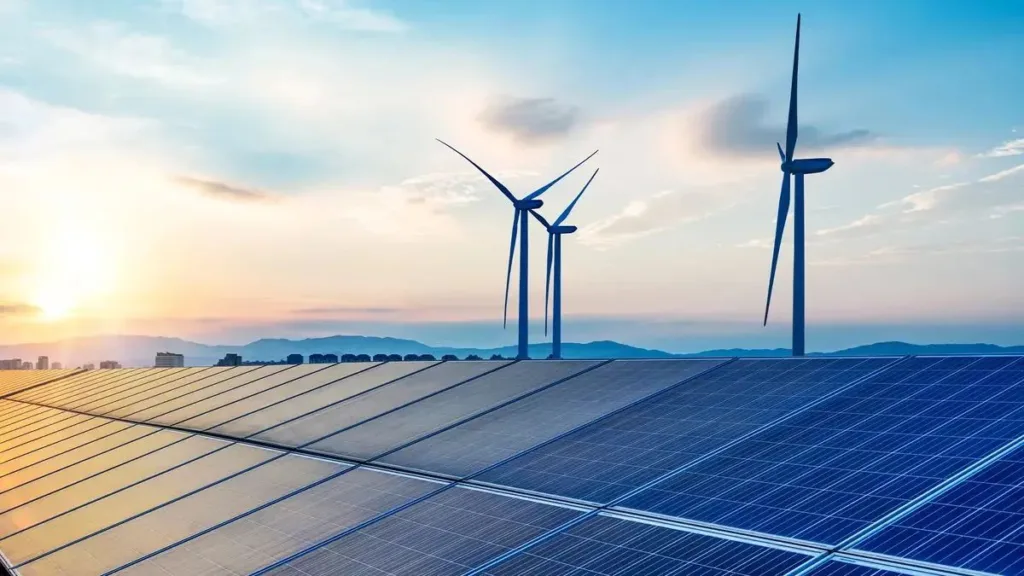
India has added a record 31.25 gigawatts (GW) of non-fossil fuel power generation capacity in the current financial year, the highest ever annual increase in the country’s clean-energy history. This was announced by Union Minister for New and Renewable Energy, Pralhad Joshi, during the inaugural session of the Global Energy Leaders Summit 2025 held in Puri, Odisha.
A substantial portion, 24.28 GW came from solar installations, underscoring the dominant role of solar power in India’s ongoing energy transition. According to Joshi, the country’s solar capacity has surged from just 2.8 GW about 11 years ago to roughly 130 GW today, a growth of over 4,500 per cent.
What the Numbers Show
As of end-February 2025, India’s total non-fossil installed capacity stood at 222.86 GW.
The newly added 31.25 GW marks the fastest annual growth on record.
The additions span solar, wind, hydro, nuclear and other clean sources though solar led the charge.
Broader Implications
This milestone strengthens India’s case as a global clean-energy leader. Joshi pointed out that between 2022 and 2024 alone, India contributed 46 GW to worldwide solar capacity additions making it among the top contributors globally.
The acceleration also reflects India’s commitment to its long-term target of achieving 500 GW of non-fossil capacity by 2030, in line with its climate obligations under the Paris Agreement.
New Initiatives & Future Focus
During the summit, Joshi announced a major rooftop solar initiative under the newly approved Utility-Led Aggregation (ULA) model for the state of Odisha. The plan seeks to install 1.5 lakh rooftop solar units expected to benefit 7–8 lakh people particularly from economically weaker sections.
The government also reaffirmed efforts to expedite signed power-purchase agreements and strengthen the domestic manufacturing of solar modules, making the renewables sector a potential driver for employment and local industry growth.
What Remains to Be Done
While installed capacity is surging, converting capacity into reliable electricity supply remains a challenge. Integration of renewables into the grid, efficient transmission infrastructure, and balancing generation from variable sources will be crucial as India scales up its clean-energy infrastructure.
Still, this year’s 31.25 GW addition represents a major leap forward signalling that India’s push for a cleaner, greener energy future is gathering speed