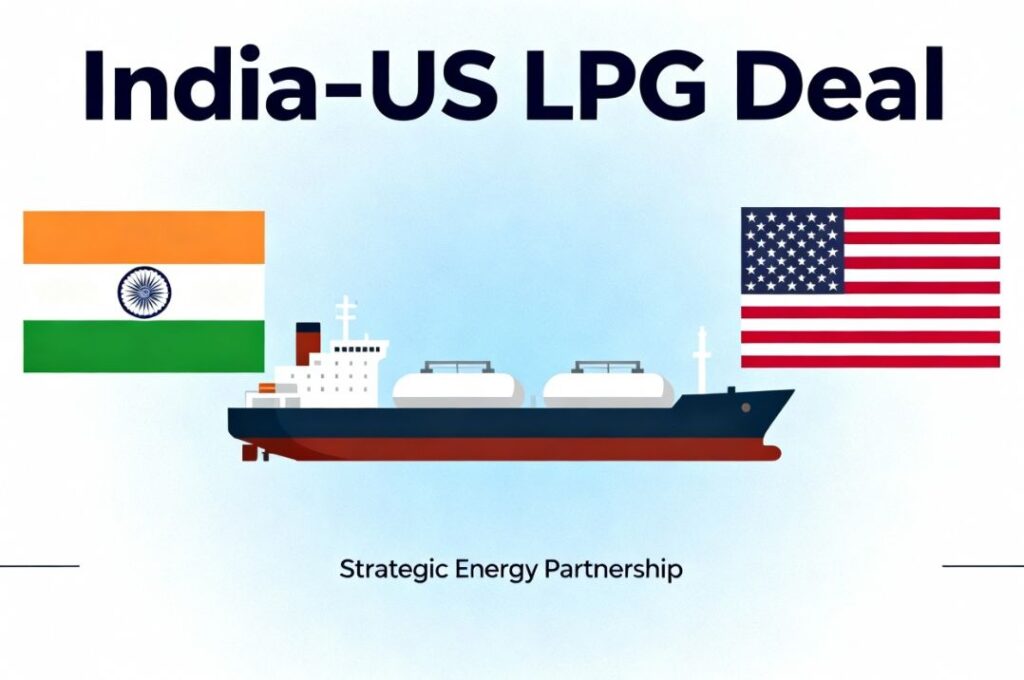
In a landmark move aimed at strengthening India’s long-term energy security, the government on 19 November 2025 signed its first major structured contract to import 2.2 million tonnes per annum (MTPA) of liquefied petroleum gas (LPG) from the US Gulf Coast. Announced by Petroleum and Natural Gas Minister Hardeep Singh Puri, the agreement marks a decisive shift in India’s sourcing strategy for one of its most essential household fuels.
Why This Deal Matters and Why It’s Being Called “Historic”
India currently imports around 22 million tonnes of LPG every year. Until now, the vast majority of this supply came from the Middle East. The new contract ensures that nearly 10% of India’s LPG imports for 2026 will come directly from the United States, making it the first time India has locked a sizable, long-term LPG deal with the world’s largest producer.
The move diversifies India’s supply basket, reducing dependence on any single region a strategic cushion against geopolitical tensions, shipping disruptions, or price shocks.
For the first time, three major public-sector oil companies Indian Oil, BPCL and HPCL have collectively signed a structured contract benchmarked to US Mount Belvieu pricing. This marks a major transition in how India negotiates and secures its cooking gas supply.
A Deal Months in the Making
The agreement is the outcome of a targeted diplomatic-commercial effort. In July 2025, senior executives from India’s state-run oil firms travelled to the US to meet top American LPG suppliers. Their objective was clear: secure a reliable, year-long, index-linked agreement that would reduce volatility and guarantee supply.
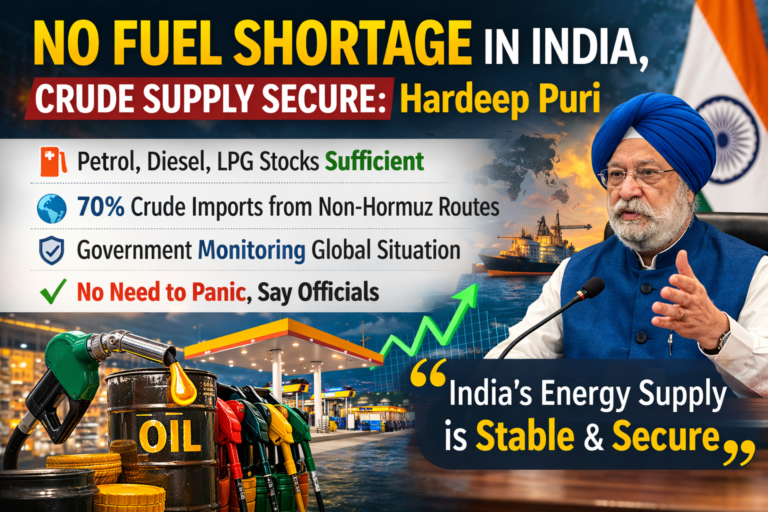
According to Puri, the deal reflects the government’s proactive approach under Prime Minister Narendra Modi, focusing on long-term energy independence rather than short-term fixes.
What This Means for Households and the Ujjwala Scheme
With global LPG prices having spiked over 60% last year, the Indian government absorbed a massive subsidy burden ₹40,000 crore to ensure affordability for Pradhan Mantri Ujjwala Yojana (PMUY) beneficiaries, who continue receiving subsidised cylinders at ₹500–550 despite global rates crossing ₹1,100.
The new US deal strengthens the government’s ability to continue such support. More stable, diversified sourcing helps keep costs predictable and shields Indian consumers from international volatility.
Experts say that while the agreement may not immediately reduce LPG cylinder prices, it creates a buffer that prevents sudden spikes, ensuring predictable, affordable access to cooking fuel.
Strengthening India’s Energy Resilience
India recently faced a brief supply disruption in Mumbai an incident that underscored the need for redundancy in energy supply lines. By securing 10% of its imports from a new region, India reduces the risk of localised shortages caused by regional tensions or shipping bottlenecks.
Market analysts, including Nilesh Ghuge of HDFC Securities, call the deal a “positive, stability-enhancing step” that ties India more deeply into global LPG flows.
Boost for PSU Oil Firms and Refiners
For IndianOil, BPCL and HPCL, the structured contract brings predictability in procurement and reduces exposure to price shocks. With the government set to reimburse around ₹30,000 crore in past under-recoveries, public oil marketing companies are poised to strengthen their financial footing.
Standalone refiners like MRPL and CPCL are also expected to gain from firm global refining margins, which remain strong due to elevated fuel cracks.
A Win for India’s Energy Future
The new LPG agreement marks more than just a trade deal, it’s a significant stride toward energy diversification, market stability, and consumer protection. As India deepens ties with the US energy market, the country positions itself as a forward-looking, resilient participant in the global energy system.
For millions of Indian households, it translates into a simple yet powerful outcome: clean cooking gas that remains affordable, accessible and uninterrupted.
India’s kitchens are now firmly connected to a broader vision of strategic autonomy and global energy integration.