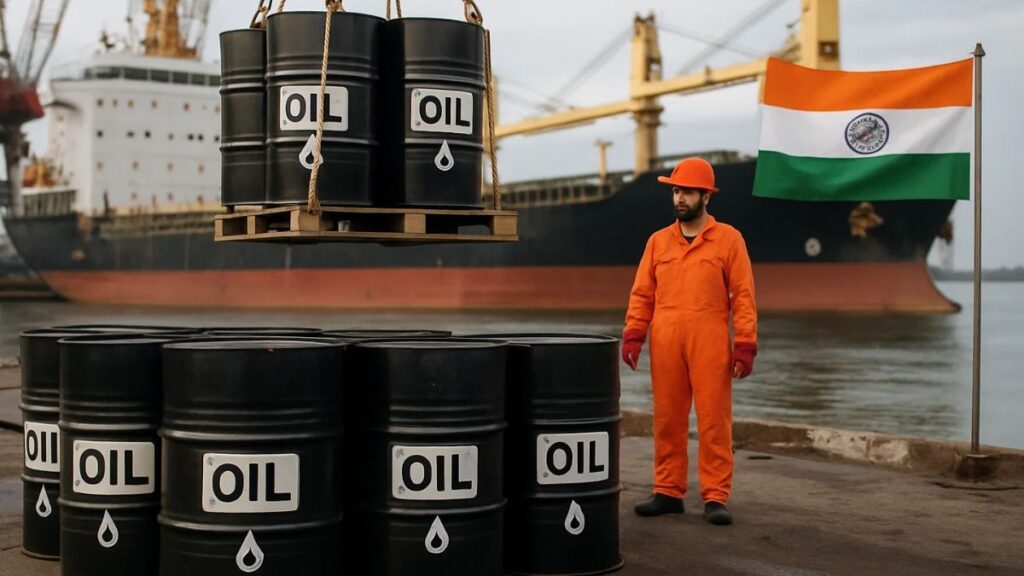
India is expected to continue buying Russian crude on a long term basis even as pressure mounts from the United States to scale back energy ties with Moscow. Data and assessments from energy analytics firm Kpler indicate that Indian refiners remain strongly committed to Russian supplies because of cost advantages and steady availability.
Russian oil remains India’s cheapest large volume option
Industry trackers note that Russian grades continue to be priced well below supplies from the Middle East and the Atlantic region. For price conscious Indian refiners this makes Russian crude an economically attractive choice. The Urals grade in particular offers better refining margins and higher diesel and jet fuel yields which play a central role in India’s fuel economy.
Kpler data shows that India’s intake of Russian crude has stayed strong throughout recent months despite tightening American sanctions on Russian state owned producers and traders. The discounts available on Russian grades continue to outweigh political and compliance risks for most Indian refiners.
Temporary adjustments but no policy reversal
Some Indian companies are expected to reduce direct imports from Russian firms to avoid being caught by the latest round of US measures. However analysts widely believe this will only change the route not the quantity. Russian oil is expected to keep flowing through intermediaries and alternative traders making the supply less visible but still reliable.
Energy experts say that India may shift a part of its sourcing to the Middle East Africa the United States and Latin America but none of these regions can replace Russian crude fully in terms of refining efficiency or cost.
Balancing economics and geopolitics
New Delhi continues to maintain that its energy decisions are guided by national interest and market stability. Indian officials have repeatedly stressed that the country needs secure and affordable supplies to support a fast growing economy.
Despite vocal criticism from Washington India has not committed to reducing Russian oil purchases. Instead the government is pursuing a pragmatic middle path one that protects economic interests while avoiding direct confrontation with Western partners.
The road ahead
Global observers expect India’s Russian crude intake to remain steady for the foreseeable future. While trade routes may evolve the long term relationship between Indian refiners and Russian suppliers is unlikely to weaken given the strong economic incentives involved.
In practical terms this means Russian oil will continue to play a central role in India’s energy security strategy even as geopolitical tensions intensify.