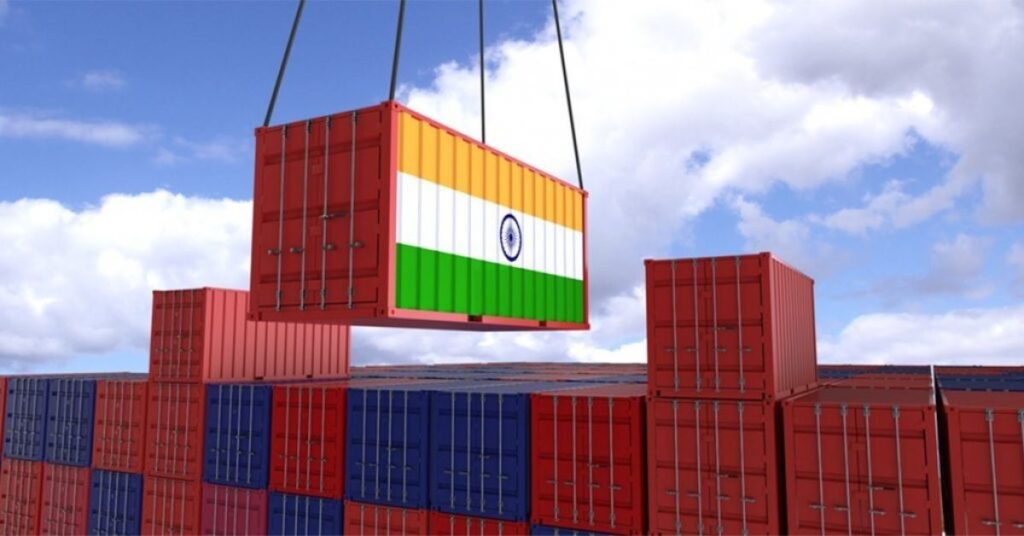
India’s agricultural exports are defying global trade pressures, rising faster than the country’s overall merchandise exports and emerging as one of the strongest-performing segments of the economy this year.
According to official data for April–September 2025, India’s farm exports rose 8.8% to $25.9 billion, up from $23.8 billion in the same period last year. In comparison, total merchandise exports in the first half of the financial year grew just 2.9%, from $213.7 billion to $219.9 billion, underscoring the standout performance of the agricultural sector.
This growth pattern mirrors last year’s trend: in 2024–25, agricultural exports climbed 6.4% while overall merchandise exports remained nearly flat, inching up by just 0.1%.
Rice, Meat, Seafood, and Coffee Drive the Surge
The bulk of this year’s export momentum has come from high-performing categories including non-basmati rice, buffalo meat, marine products, coffee, and fruits and vegetables each of which earned over a billion dollars in 2024–25 and continues to expand.
Exports of non-basmati rice, in particular, surged after the government rolled back several export restrictions that had been imposed between 2022 and 2023 to manage domestic inflation. With improved monsoon rainfall and rising grain stocks, curbs on broken rice and white non-basmati rice were lifted, and duties on parboiled rice were eased. As a result, non-basmati rice exports are now on track to beat last year’s $6.5 billion record.
Buffalo meat exports are also rebounding strongly and could surpass the 2014–15 peak of $4.8 billion. Marine product shipments already up 17.4% in April–September may breach their all-time high of $8.1 billion recorded in 2022–23.
Seafood Sector Shows Remarkable Resilience to Trump Tariffs
Despite being heavily exposed to the US market, India’s seafood sector has shown surprising resilience against the steep tariffs imposed by President Donald Trump amounting to an effective rate of over 58%.
While shipments to the US dipped only marginally by 0.4% to $1.3 billion, exporters successfully compensated by expanding into China, Vietnam, Japan, Thailand, the European Union, and Canada. Total marine exports grew from $3.4 billion to $4 billion in the first half of the year.
This diversification has reduced dependence on a single market and helped the industry cushion the tariff shock.
Coffee Exports Hit New Highs on Global Price Rally
India’s coffee exporters are riding a wave of soaring global prices due to historically low international coffee stocks. As a result, India’s coffee exports have doubled in five years from $738.9 million in 2019–20 to $1.8 billion in 2024–25.
If current price trends continue, coffee exports could cross the $2 billion mark this year for the first time.
Consistent Growth in Fruits and Vegetables
Exports of both fresh and processed fruits and vegetables continue to show steady progress. Fresh fruit and vegetable exports have risen from $1.4 billion in 2019–20 to $2.1 billion in 2024–25. Processed fruits and vegetables have almost doubled in the same period.
Strong demand from West Asia, Europe, and Southeast Asia has helped sustain this momentum.
A Decade Record
India’s agricultural export trajectory over the past decade has been closely linked with global food price movements. Farm exports hit $43.3 billion in 2013–14 before falling to $32.8 billion in 2015–16. They recovered gradually, touching $53.2 billion in 2022–23 at the peak of global food inflation, before easing to $48.8 billion in 2023–24.
Government-imposed export restrictions on items like wheat, rice, sugar, onions, and de-oiled rice bran also contributed to these fluctuations, as domestic inflation control sometimes took priority over export growth.
What Lies Ahead?
The outlook for the second half of 2025–26 will depend heavily on two major factors:
1. Weak Global Food Prices
The FAO Food Price Index for October 2025 fell to 126.4, far below its 2022 peak. Prices of cereals and sugar are at multi-year lows. Historically, lower global food prices tend to slow India’s export growth a possible challenge in the coming months.
2. Impact of US Tariffs
There are growing signs that US tariffs are beginning to hurt more sensitive export categories. In September, India’s exports to the US showed significant declines:
Marine products: –26.9%
Spices: –45.1%
Basmati rice: –17.8%
However, recent signals from Washington suggest a potential softening. President Trump has rolled back tariffs on several food items crucial to India’s export basket, including spices, tea, coffee, and fresh fruits raising hopes for a broader trade agreement before year-end.
Farm Imports Rise, Led by Vegetable Oils
Agricultural imports rose 5.9% to $19.5 billion in April–September 2025. The increase is driven mainly by vegetable oil imports, which jumped 13.5% and may once again touch the $20-billion mark.
Imports of pulses have eased after a bumper domestic harvest and the return of import duties. Meanwhile, imports of fresh fruits and raw cotton continue to grow, with the US remaining India’s biggest supplier of high-value nuts and fruits.
Conclusion
India’s agricultural sector continues to be a standout performer in the country’s trade landscape. Even in the face of tariff pressures, volatile global prices, and slowing demand, farm exports have displayed resilience, adaptability, and strong market diversification.
While the months ahead may bring challenges, especially with weakening global prices, India’s agricultural export engine remains firmly in motion and continues to provide a critical buffer to the overall economy.