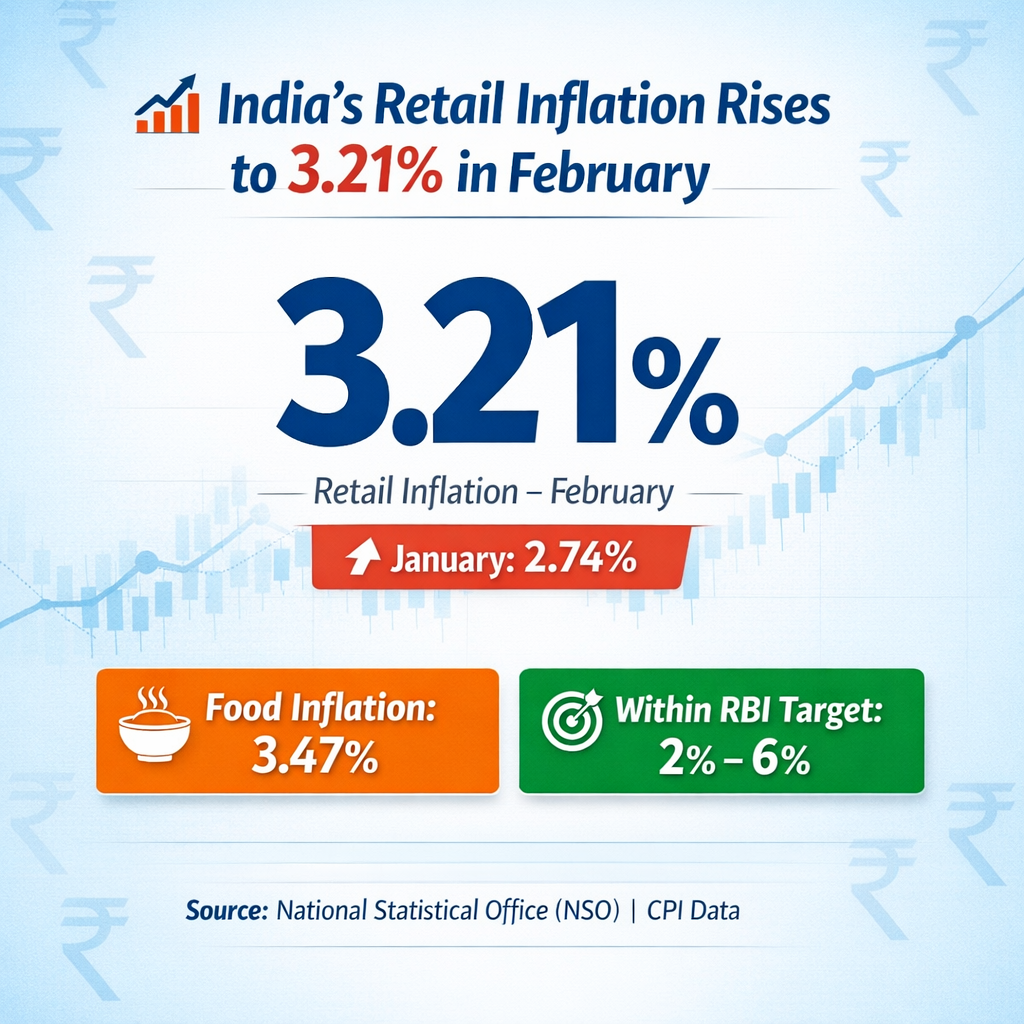
India’s retail inflation rose to 3.21% in February 2026, up from 2.74% in January, according to the latest data released by the National Statistical Office (NSO). The increase was primarily driven by higher food prices and rising costs in certain consumer categories.
The inflation figure, measured by the Consumer Price Index (CPI), remains comfortably within the Reserve Bank of India’s (RBI) target range of 2%–6%, providing policymakers some relief despite the monthly increase.
Food Inflation Drives the Increase
Food inflation climbed to 3.47% in February, a sharp rise from 2.13% recorded in January, making it the biggest contributor to the overall uptick in retail inflation.
Several food items witnessed notable price increases during the month. Prices of vegetables such as tomato and cauliflower surged, while commodities like coconut also saw strong inflation. At the same time, prices of some staples such as onion, garlic and potatoes declined, partially offsetting the overall rise in food prices.
Inflation Still Within Comfort Zone
Despite the increase, analysts note that the headline inflation rate remains relatively moderate compared to historical levels and remains below the RBI’s 4% medium-term target. Core inflation which excludes food and energy has stayed stable, indicating controlled underlying price pressures in the economy.
Rural inflation stood slightly higher at 3.37%, while urban inflation was recorded at 3.02%, reflecting marginally stronger price pressures in rural areas.
New CPI Series in Effect
The February data is based on the revised CPI series with 2024 as the base year, introduced to better reflect current consumption patterns based on the Household Consumption Expenditure Survey 2023–24. The new series reduces the weight of food items in the index while increasing the share of services and other categories.
Outlook
Economists expect inflation to remain relatively contained in the coming months, although global factors such as rising crude oil prices and geopolitical tensions could add upward pressure to prices. Policymakers at the RBI are likely to continue monitoring inflation trends closely before making any changes to interest rates.
Overall, while February’s inflation reading marks an increase from the previous month, it still suggests that price pressures in the Indian economy remain largely under control.