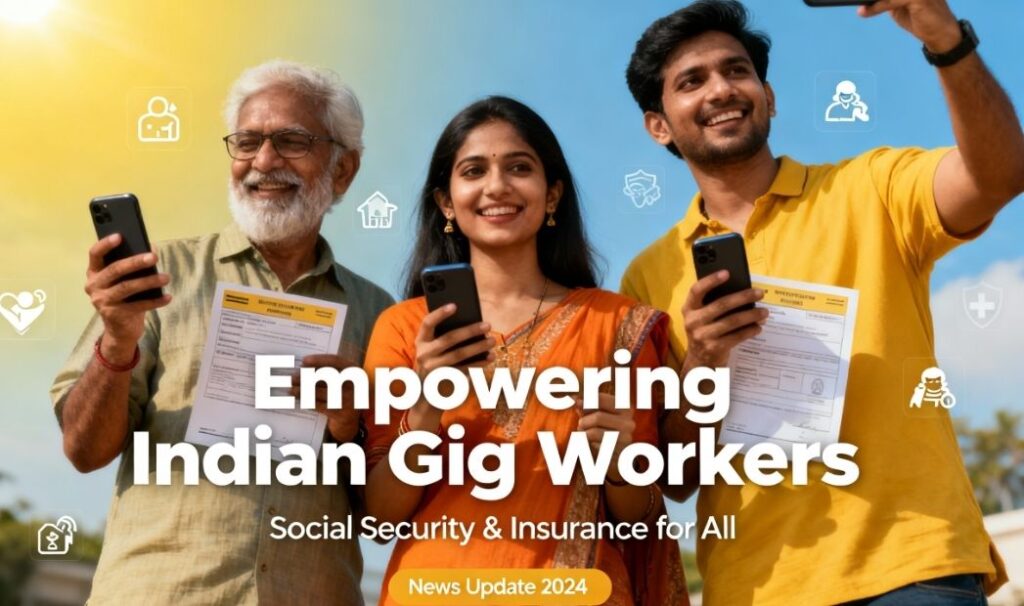
In a major overhaul of India’s labour framework, the Central government on November 21, 2025, officially implemented the four new labour codes, replacing 29 legacy laws with a unified, modern regulatory structure. Among the most impactful reforms is the formal inclusion of gig and platform workers such as delivery partners on Swiggy, Zomato, Amazon, and other digital platforms under the country’s social security network for the very first time.
Gig Workers Get Access to PF, Insurance, and Gratuity
The enforcement of the Code on Social Security, 2020 marks a historic shift. Gig and platform workers, previously operating without formal safeguards, will now be eligible for provident fund, health insurance, accident compensation, gratuity, maternity benefits, and old-age protection. These entitlements will be linked to Aadhaar, ensuring portability across states and platforms.
Digital platforms classified as “aggregators” will be mandated to contribute 1–2% of their annual turnover to a dedicated welfare fund for gig workers. This contribution, however, will not exceed 5% of the total payments made to workers, offering a balanced approach between worker protection and business viability.
Mandatory Appointment Letters, Minimum Wages, Health Check-Ups
Along with gig worker recognition, the new labour codes introduce a wider set of protections for all workers. These include:
Mandatory appointment letters for employees
Minimum wage guarantees
Annual health check-ups at no cost
Improved safety and welfare standards across establishments
Prime Minister Narendra Modi described the reforms as “one of the most progressive labour initiatives since Independence,” emphasising that the new structure aligns workers’ dignity with the government’s focus on attracting investment and supporting business growth.
A Growing Workforce Gets Long-Awaited Protection
India is home to over 10 million gig workers, a number projected to reach 23.5 million by 2030 as digital services expand. The new social security mandate is expected to significantly strengthen this fast-growing segment, providing long-term safety nets that were previously unavailable.
As the rules take effect nationwide, gig platforms will be required to integrate these welfare provisions into their systems, marking a transformative moment for India’s rapidly evolving workforce.