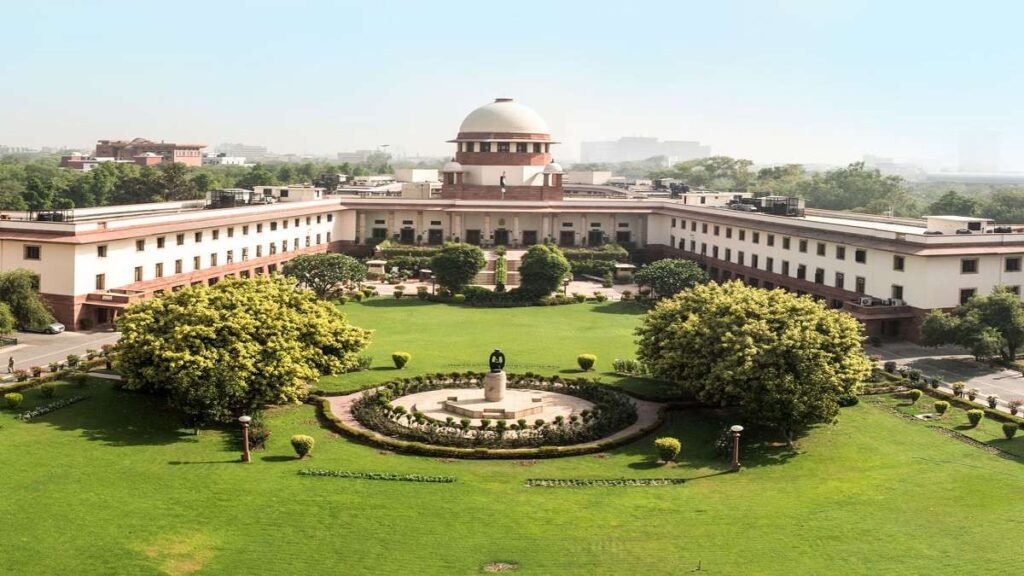
A five-member Constitution Bench of the Supreme Court is likely to pronounce its verdict this week on one of the most significant questions concerning the functioning of India’s legislative and executive branches whether the President and state Governors can be given a judicially enforceable deadline to assent to bills.
The development follows a Presidential Reference sent by President Droupadi Murmu to the Supreme Court, seeking its opinion on 14 crucial legal questions. At the heart of these questions is a constitutional dilemma: Can the judiciary prescribe a time limit for the President or a Governor to act on a bill when the Constitution itself is silent on such deadlines?
Background: Tamil Nadu Case Prompted National Debate
The issue gained prominence after a two-judge bench of the Supreme Court, in April last year, ruled that Governors and the President must dispose of bills passed by state legislatures within a “reasonable time,” effectively introducing a deadline-like expectation.
In an unprecedented move, the Court also declared ten bills passed by the Tamil Nadu Assembly as deemed to have received assent, after observing that the Governor had delayed action without justification. This marked the first time in India’s history that legislative bills were treated as approved by a direct court order.
The judgment sparked intense debate about constitutional boundaries, federal principles, and separation of powers.
Centre, BJP-Ruled States Oppose Judicial Deadlines
The central government, along with several BJP-ruled states, supported the need for a Presidential Reference. They argued that the judiciary setting deadlines intrudes into the domain of the executive and violates the Constitution’s carefully structured balance of powers.
According to them, Article 200 (Governor’s assent) and Article 111 (President’s assent) deliberately do not prescribe a time limit, leaving discretion entirely with the constitutional heads.
What the Constitution Bench Will Consider
The Supreme Court’s Constitution Bench will now address questions such as:
Can courts issue directions to constitutional authorities like the President and Governors on how fast they must act?
Can a bill be deemed to have received assent if the Governor or President does not act?
Does judicial intervention strengthen federal accountability or disrupt federal harmony?
The decision is expected to have far-reaching implications, influencing Centre–State relations, legislative functioning, and the powers of constitutional offices.
Anticipation Across Political Spectrum
States like Tamil Nadu, Kerala, Telangana, and Punjab which have frequently accused Governors of delaying action on bills are watching closely. Opposition parties argue that time-bound decision-making is essential to prevent “constitutional paralysis.”
Meanwhile, the Centre and its supporters maintain that judicially fixed deadlines could undermine the autonomy of constitutional heads and violate foundational principles.
A Landmark Verdict Expected
With the Supreme Court set to issue its opinion this week, the judgment could redefine the contours of India’s federal structure and clarify long-standing ambiguities about the powers and responsibilities of Presidents and Governors.
The verdict will likely shape the future of legislative–executive relations and determine how India’s constitutional machinery addresses delays in the lawmaking process.