India’s First Fully Digital Census to Roll Out in Two Phases with Modern Tech and Caste Enumeration
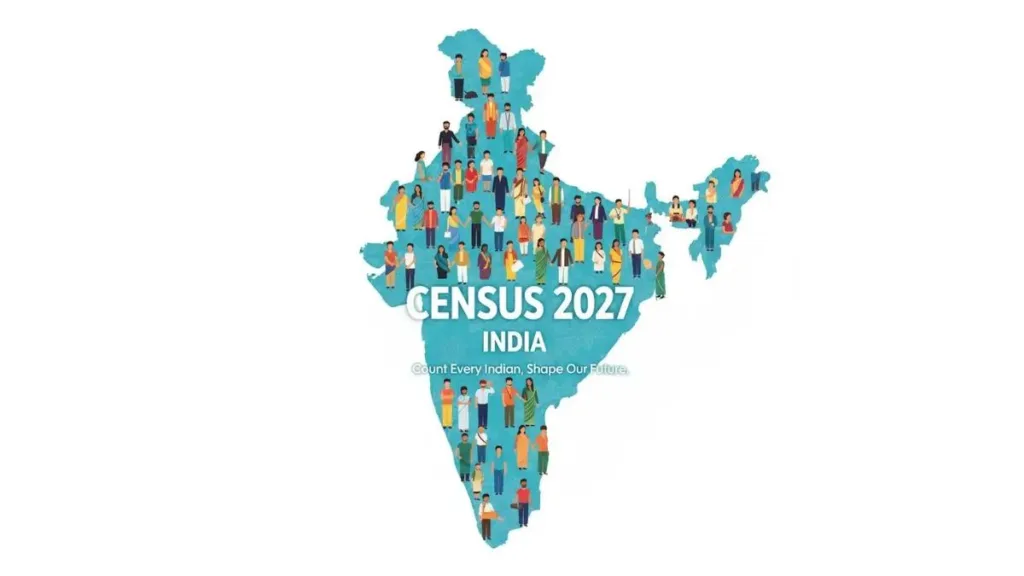
In a significant move paving the way for a modernised national headcount, the Union Cabinet, chaired by Prime Minister Narendra Modi, has approved a comprehensive scheme to conduct the Census of India 2027 at a cost of ₹11,718.24 crore. This iteration of the nationwide census will mark India’s first fully digital enumeration, transforming how demographic data is captured, processed, and shared.
The census, regarded as the world’s largest administrative and statistical exercise, will be implemented in two major phases. The first phase House listing and Housing Census is scheduled to take place from April to September 2026, followed by Population Enumeration in February 2027. In areas with challenging weather, such as Ladakh and snow-bound regions of Jammu & Kashmir, Himachal Pradesh and Uttarakhand, enumeration will begin as early as September 2026.
Digital First, A New Era for Census Data
For the first time in India’s history, the entire census process will be conducted through digital tools and mobile technology. Enumerators will use smart devices equipped with custom-built apps to capture information, replacing traditional paper-based forms. A centralised Census Management & Monitoring System (CMMS) will allow real-time tracking of field operations, helping authorities maintain higher levels of accuracy and consistency.
Officials have also introduced an innovative self-enumeration option, enabling citizens to enter their own household and demographic details digitally, subject to validation. This approach is expected to improve participation and reduce field workload.
Caste Enumeration and Data Accessibility
A notable inclusion in the Census 2027 is electronic caste enumeration, which will be captured during the Population Enumeration phase. This follows earlier governmental decisions to formally integrate caste data within the national census framework.
The introduction of Census-as-a-Service (CaaS) will allow ministries and government agencies to receive high-quality, machine-readable datasets. This means policymakers and planners can leverage demographic insights more efficiently, down to village and ward levels, improving evidence-based governance.
Scale, Workforce and Economic Impact
To accomplish this massive data exercise, the government plans to deploy about 30 lakh field functionaries, including enumerators, supervisors, and technical staff. The project is also expected to generate a substantial amount of employment roughly 1.02 crore man-days bolstering opportunities in data handling, digital operations, and field administration.
Why This Matters
India’s decennial census not only counts the population but also provides critical data on housing, amenities, literacy, employment, migration, religion, and socio-economic indicators. This information forms the backbone of planning for public services, infrastructure development, and social welfare programmes across the nation. The shift to a fully digital model is poised to further enhance data accuracy, timeliness, and accessibility for stakeholders ranging from central planners to local administrators.