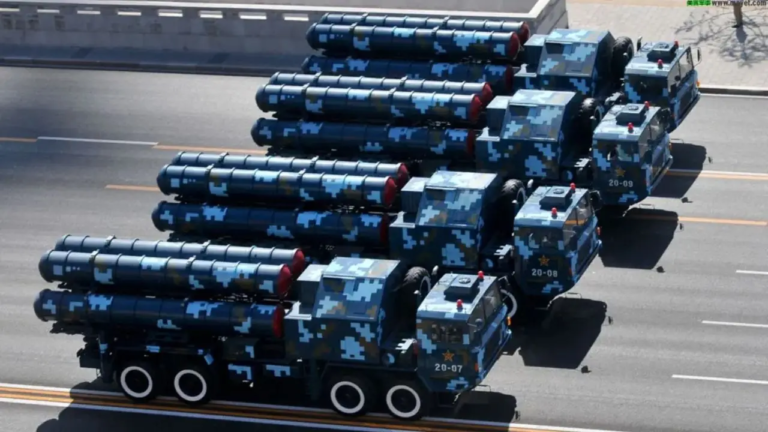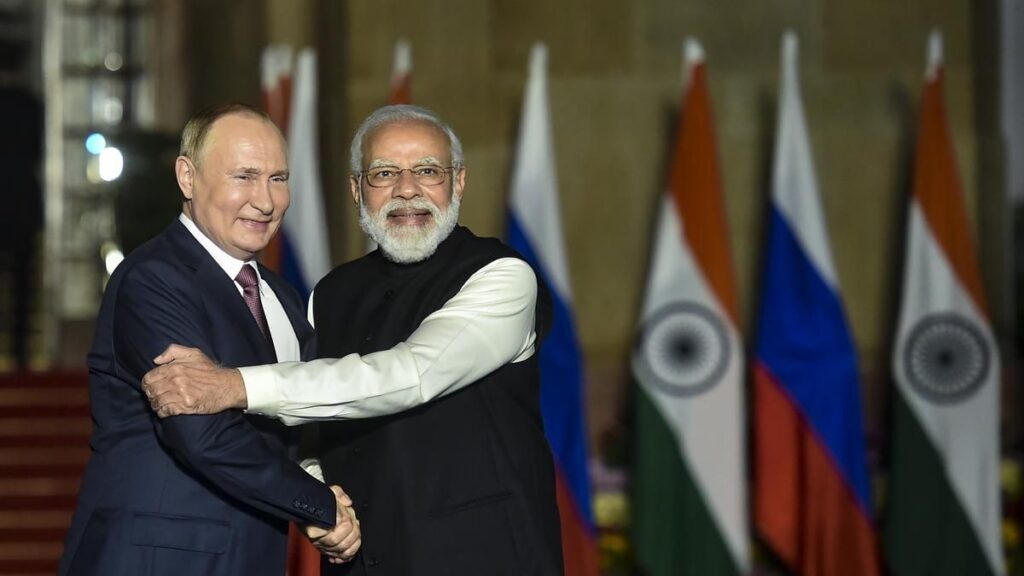
As New Delhi readies for the upcoming summit between Narendra Modi and Vladimir Putin, India appears set to press for an ambitious expansion of its air-defence and aerial combat capabilities. Sources indicate that the government is seeking to acquire five additional squadrons of the Russian S-400 Triumf surface-to-air missile (SAM) systems, a substantial increase in long-range air defence capability.
Why the Expansion?
The push for more S-400 batteries comes on the back of recent operational experience under Operation Sindoor, where the S-400 systems reportedly played a critical role in securing Indian airspace. Additionally, the existing five-squadron deal, signed in 2018 for roughly US$5.43 billion, saw delays amid geopolitical turbulence, three units are in service, while the remaining two are now slated for delivery only by 2026–27. The new request aims to restore and expand India’s long-range air defence footprint.
Su-30MKI: The Backbone of IAF Gets a Makeover
At the same time, the summit is expected to see a strong push for modernising the IAF’s fleet of Sukhoi Su-30MKI jets. With around 259 such aircraft in service, Indian officials plan to approve a major upgrade reportedly costing around ₹63,000 crore for the first batch of 84 jets.
Under the upgrade package, these jets are to be equipped with advanced radars, modern avionics, upgraded electronic-warfare systems and longer-range weapons, transforming them into “near-fifth generation” combat platforms (though not stealth). The enhancements are aimed at extending their service life, possibly well beyond 2050.
Officials have said that the upgrade will include multi-sensor fusion, improved weapons integration (including long-range missiles), and mission systems overhaul all designed to keep the Su-30MKI fleet combat-effective in the face of evolving aerial threats.
Balancing Legacy and New Acquisitions
The twin push for extra S-400 squadrons and the Su-30MKI modernisation reflects a broader strategy: to shore up India’s existing strengths while readying for future security needs. With the S-400 base already partially in place, the fresh request aims to plug potential air-defence gaps. Meanwhile, upgrading the Su-30MKI fleet avoids prematurely phasing out a major workhorse of the IAF.
India’s approach appears to balance reliance on traditional Russian systems with a desire to modernise and overhaul rather than replace proven hardware. This path offers cost-effectiveness and continuity, while ensuring readiness in a volatile security context.
What Might Come at the Summit
With the summit between Prime Minister Modi and President Putin on the horizon, government sources suggest New Delhi will make a firm case for:
Procurement of five new S-400 squadrons plus replenishment of missile stocks, to reinforce long-range air defence.
Approval of the first tranche of the Su-30MKI upgrade program, beginning with 84 jets, to revive and extend the operational life of the fleet.
Continued cooperation on maintenance, missile supply, and possibly joint production or technology transfers to support the modernised systems.
If successful, these moves could significantly reshape India’s air-defence posture combining long-range interception capability with enhanced aerial combat readiness.
As India prepares for the Modi–Putin summit, the defence envelope being sought is bold and ambitious. By pressing for additional S-400 squadrons and committing to a major Su-30MKI upgrade, New Delhi aims to strengthen both defensive and offensive layers of air power signalling that maintaining air superiority remains a top strategic priority