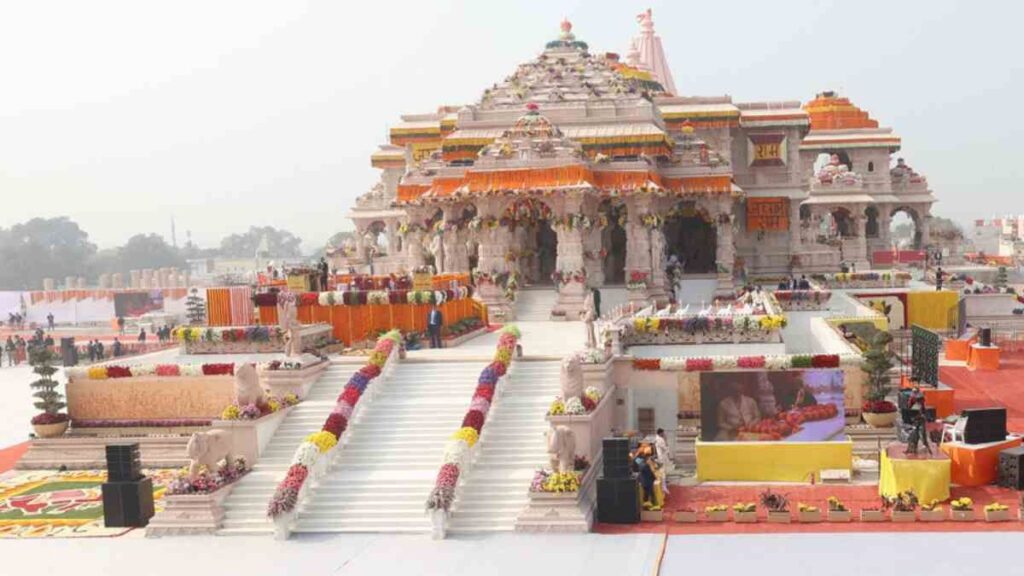
A new report by the Indian Institute of Management Lucknow outlines a dramatic economic transformation in Ayodhya following the construction and consecration of the Ram Lala Temple, positioning the city as one of India’s fastest-growing religious tourism hubs.
Ayodhya Economy: Before the Temple Construction
Before the Ram Mandir project began, Ayodhya functioned largely as a seasonal pilgrimage town with limited infrastructure and modest economic activity.
Key indicators from the pre-construction phase include:
Approximately 1.7 lakh visitors annually.
A predominantly seasonal pilgrimage-based economy.
Average daily earnings of ₹400–₹500 for local shopkeepers.
Limited hotel infrastructure with almost no national hospitality chains.
Poor connectivity, an old railway station, and no airport.
Youth migration to other cities in search of employment.
Negligible contribution to state tourism revenue.
Stagnant property prices.
Livelihoods concentrated around priests, small eateries, and souvenir stalls.
Minimal large-scale government investment.
The city’s economic base remained narrow, with limited diversification beyond traditional religious services.
Post-Temple Surge: A Rapid Economic Upswing
Following the completion of the Ram Lala Temple, Ayodhya has witnessed an unprecedented surge in footfall and investment.
According to the report:
Over 11 crore visitors arrived in the first six months after the temple’s opening.
The city is projected to host 5–6 crore visitors annually.
Nearly ₹85,000 crore worth of redevelopment projects have been launched.
Local shopkeepers are now earning around ₹2,500 per day.
Around 1.2 lakh new jobs have been created across tourism, transport, and hospitality sectors.
An international airport and a fully upgraded railway station have significantly improved connectivity
Major hotel brands such as Taj Hotels, Marriott International, and Wyndham Hotels & Resorts are entering the market
Real estate prices have increased by 25–40% overall, with properties near the temple appreciating 5–10 times.
Annual tourism revenue is expected to cross ₹100 billion.
GST collections have reportedly exceeded ₹400 crore.
Smart city infrastructure upgrades include improved roads, lighting, security systems, and e-transport services.
From Pilgrimage Town to Economic Growth Engine
The report describes Ayodhya’s transformation as a case study in how faith-driven tourism, when supported by infrastructure and policy planning, can catalyze regional economic revival.
Improved connectivity through a new international airport and modernized rail infrastructure has expanded the city’s accessibility nationwide and globally. Simultaneously, large-scale public and private investments have diversified the local economy beyond traditional temple-linked occupations.
Real estate markets, hospitality, retail, and transportation sectors have all seen significant momentum, while employment opportunities have reduced outward migration pressures.
A Model for Religious Tourism-Led Development?
The IIM Lucknow analysis suggests Ayodhya could emerge as a model for faith-based urban development in India. With sustained visitor inflows and ongoing infrastructure expansion, the city is expected to continue generating employment, increasing tax revenues, and attracting institutional investment.
As redevelopment projects progress and hospitality capacity expands, Ayodhya’s economic renaissance may represent one of the most significant urban transformations driven by religious tourism in recent Indian history.