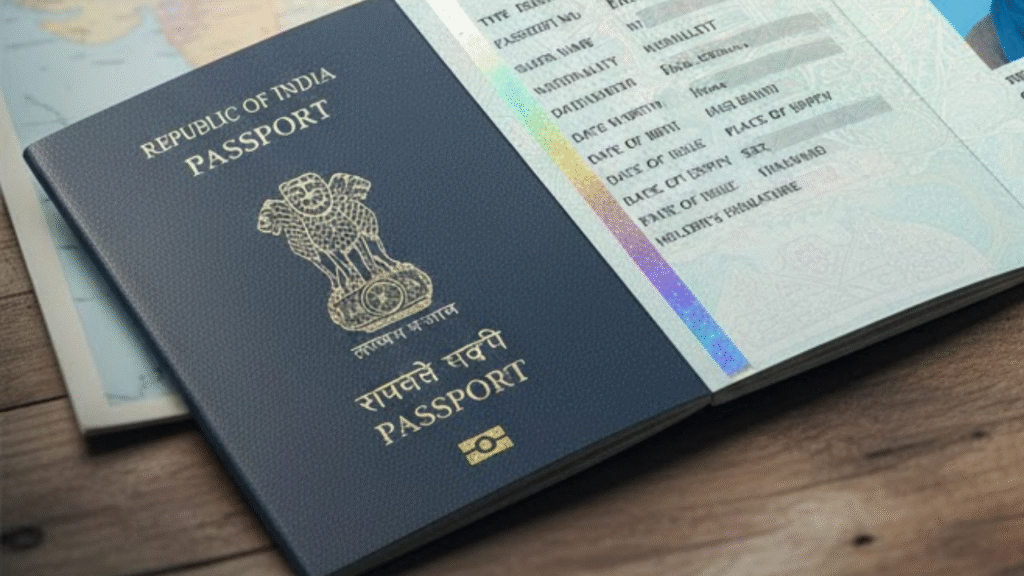
India has begun a major technological upgrade in its passport ecosystem, with the government confirming that every new passport issued since May 2025 is now an e-passport. The rollout marks one of the most significant security enhancements in India’s travel documentation in decades.
According to senior officials, over 80 lakh e-passports have already been issued across India, along with 62,000 more by Indian missions abroad. The shift is designed to protect citizens from identity theft, strengthen national security, and align India with global travel standards.
What Makes an E-Passport Different
Describing the transition as “moving from 3G to 5G”, officials say the new passport contains a contactless RFID chip embedded in its back cover. This secure chip stores:
The passport holder’s facial image
Key demographic details
A digital security certificate
Data protected by cryptographic protocols and PKI standards
The system is fully compliant with International Civil Aviation Organisation (ICAO) norms, making it more tamper-resistant and extremely difficult to clone or forge.
Stronger Safeguards Against Fraud
Officials say the enhanced design significantly reduces impersonation risks.
“It prevents others from impersonating you. It is evolution,” one senior official said, adding that fraudulent attempts to secure an Indian passport will be “greatly reduced”.
Costs Will Not Rise for Citizens
While the inputs needed to manufacture e-passports are more expensive, the Ministry of External Affairs (MEA) has clarified that passport fees will remain unchanged.
“The input cost has increased, but there are no changes in the cost of passports. We are absorbing the rise,” an official confirmed.
Data Protection Assured
Addressing privacy concerns, officials emphasised that all personal data remains fully under MEA control. The system is operated by Tata Consultancy Services (TCS), but the government retains full ownership of infrastructure and databases.
Old Passports Still Valid
Traditional, non-electronic passports will remain valid until 2035, giving citizens a long transition window. However, for those renewing their documents or applying for the first time, the shift to e-passports is automatic.
A Major Leap in Secure Travel
As India accelerates the rollout, the new e-passports sleek, tamper-proof, and technologically fortified are set to become one of the most secure travel documents globally. For millions of Indians, the future of seamless, safe international travel has already begun.