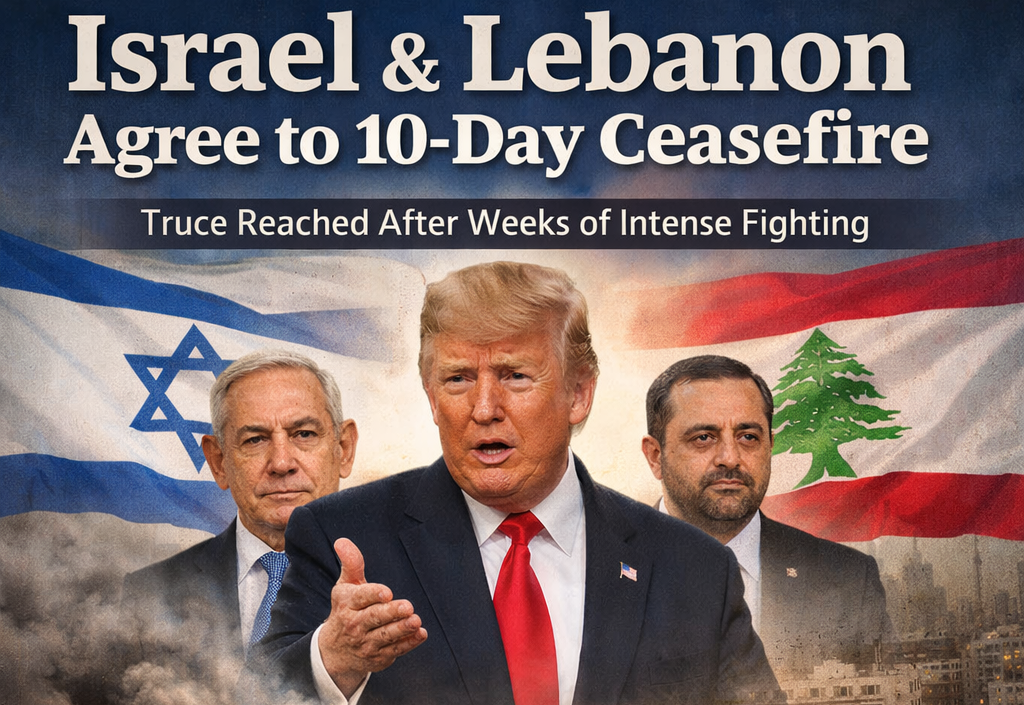
Israel and Lebanon have agreed to a 10-day ceasefire, bringing a temporary halt to more than a month of intense cross-border fighting that has caused widespread destruction and displacement across the region.
The truce was announced by Donald Trump, who said the agreement followed “excellent conversations” with Israeli Prime Minister Benjamin Netanyahu and Lebanon’s leadership. The ceasefire came into effect immediately and could be extended depending on progress in ongoing negotiations.
Diplomatic Push Behind the Deal
The United States played a central role in brokering the agreement, with talks held in Washington aimed at opening a path toward a broader peace arrangement between the two countries, who currently do not have formal diplomatic relations.
Officials said the deal includes commitments to reduce hostilities and begin discussions on long-term security along the Israel–Lebanon border. Washington has also invited both sides for further negotiations at the White House in what could become the most significant diplomatic engagement between the two nations in decades.
Conflict Background and Human Cost
The ceasefire follows weeks of escalating violence involving Israeli forces and the Iran-backed militant group Hezbollah. Since early March, Israeli airstrikes and military operations in Lebanon have reportedly killed over 2,000 people and displaced more than 1 million civilians, according to officials and media reports.
The conflict intensified amid broader regional tensions linked to Iran, with Lebanon becoming a key front in the wider Middle East crisis.
Terms and Ground Reality
While both sides have agreed to pause offensive actions, the situation on the ground remains fragile. Israel has indicated it will maintain a security presence in southern Lebanon, citing national security concerns, while Hezbollah has insisted that any truce must include a full halt to Israeli operations.
There have already been reports of sporadic violations and gunfire even after the ceasefire took effect, raising concerns about its durability.
Uncertain Path Ahead
The 10-day pause is being viewed as a confidence-building measure rather than a final resolution.
Key sticking points remain unresolved, including:
Hezbollah’s disarmament.
Israeli troop presence in southern Lebanon.
Border security arrangements.
Wider regional tensions involving Iran
Global leaders, including the United Nations, have urged all parties to respect the ceasefire and use the window to push for a lasting peace agreement.
Negotiations are expected to continue in the coming days, with the possibility of extending the ceasefire if tangible progress is made. However, analysts warn that deep-rooted mistrust between the sides could derail efforts if violations persist.
For now, the ceasefire offers a brief respite to civilians on both sides of the border many of whom are beginning to return to their homes amid cautious optimism.